
5 Living Room Layouts You Can Build with a Modular Sofa
Not sure how to arrange your modular cloud sofa? Here are 5 proven living room layouts — from cozy apartments to open-plan family rooms — with piece-by-piece setup guides.
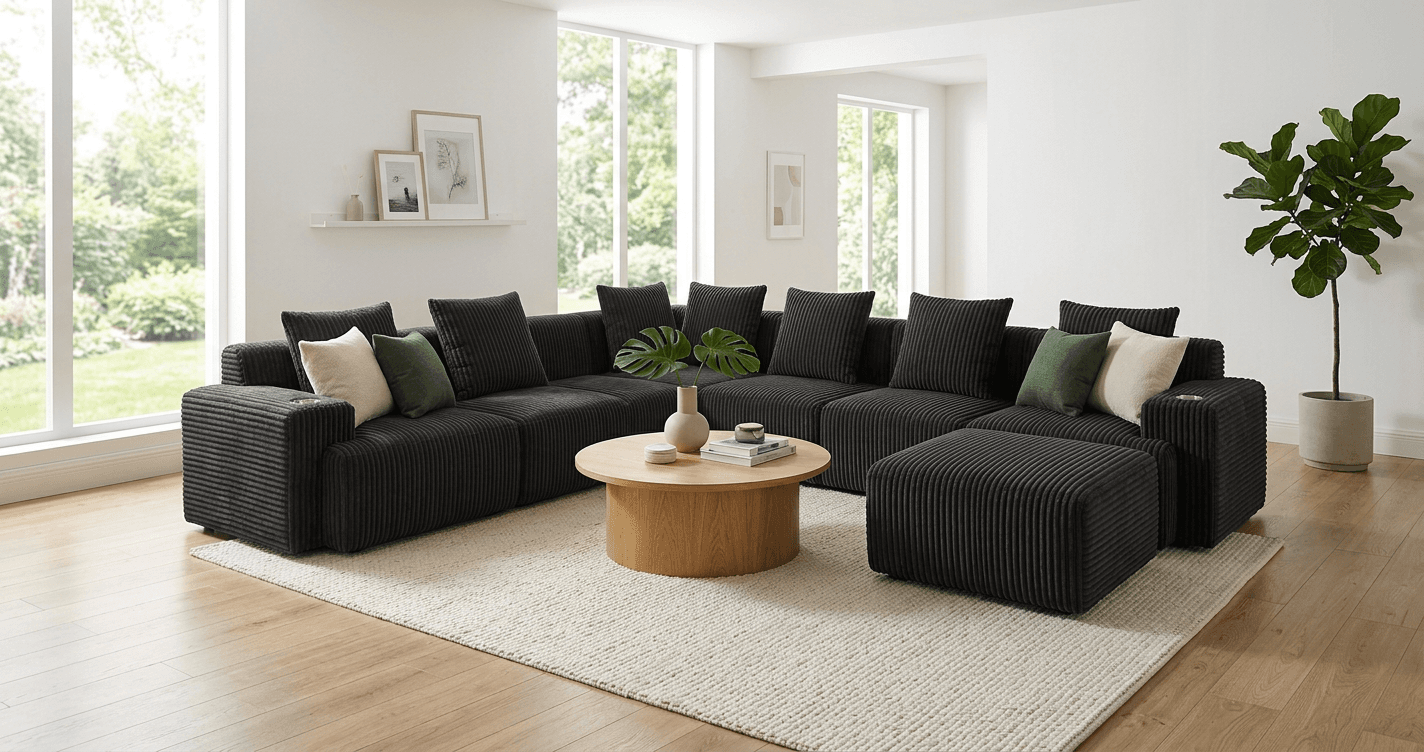
You've got the pieces. Now what?
One of the best things about a modular cloud sofa is that it doesn't lock you into a single arrangement. But that freedom can also feel overwhelming — where do you even start?
We've put together five proven living room layouts that work in real homes, not just showrooms. Each one includes the exact pieces you need, the ideal room size, and practical tips to make it work.
Layout 1: The Classic Straight Line
Pieces needed: Left Armrest + Middle Section + Right Armrest (3 pieces)
Best for: Small to medium rooms, apartments, rooms with a TV wall
This is the most straightforward layout and it works almost everywhere. Three pieces in a row create a traditional sofa silhouette with cloud-level comfort.
How to set it up:
- Place the sofa centered on your main wall, facing the TV or fireplace
- Leave at least 4 inches between the sofa back and the wall for air circulation
- Add a rectangular coffee table in front, 16 inches from the sofa edge
Why it works: The straight line keeps traffic flow clean on both sides of the sofa. It's symmetrical, easy to style, and makes narrow rooms feel wider because it doesn't jut out into the space.
Pro tip: If 3 pieces feel too short, add a second middle section for a generous 4-piece straight sofa. This gives each seat more breathing room without changing the layout.
Layout 2: The L-Shape
Pieces needed: Left Armrest + 2 Middle Sections + Right Armrest + Ottoman (5 pieces)
Best for: Medium to large rooms, open-plan living areas, corner placement
The L-shape is the most popular modular layout for a reason — it creates a natural conversation zone and maximizes seating without needing additional chairs.
How to set it up:
- Anchor the long side against your main wall
- Extend the short side (ottoman or extra section) perpendicular into the room
- The L should point toward the center of the room, not toward a wall
- Place a round or oval coffee table in the inside corner of the L for easy reach from all seats
Why it works: The L-shape defines your living area without walls or dividers. It naturally creates an intimate seating zone that draws people in. The perpendicular section also acts as a subtle room divider in open-plan spaces.
Pro tip: Can't decide which direction the L should face? Stand at your room's main entrance and look in. The L should extend toward you, welcoming you into the seating area — not pointing away toward a wall.
Layout 3: The Chaise Lounge
Pieces needed: Left Armrest + Middle Section + Ottoman (3 pieces) or Right Armrest + Middle Section + Ottoman
Best for: Bedrooms, reading nooks, small living rooms, one-person relaxation
This is the ultimate layout for someone who uses the sofa primarily for lounging, reading, or napping. The ottoman at the end creates a built-in chaise where you can fully stretch out.
How to set it up:
- Place the armrest piece against a wall or near a window for natural light
- Connect the middle section
- Add the ottoman at the open end to create the chaise extension
- Position a floor lamp behind the armrest end for reading light
- A small C-shaped side table over the armrest keeps your drink within reach
Why it works: The chaise layout is longer than it is wide, making it perfect for narrow rooms or dedicated relaxation corners. It gives one person the full luxury of stretching out completely while still seating two or three when upright.
Pro tip: Place this layout next to a window. There's nothing better than reading on a cloud chaise with natural light streaming in.
Layout 4: The U-Shape
Pieces needed: Left Armrest + 3 Middle Sections + Right Armrest + Ottoman (6 pieces)
Best for: Large living rooms, family movie nights, entertaining guests
The U-shape is the ultimate social layout. It wraps seating around three sides, creating an enclosed, stadium-like arrangement that's perfect for movie nights or big gatherings.
How to set it up:
- Place the back of the U against your main wall
- Extend both arms forward into the room at equal length
- The TV or fireplace should face the back of the U directly
- Use a large square or round coffee table in the center — everyone needs to reach it
- Leave at least 30 inches of walkway space at the open end of the U
Why it works: Everyone faces each other. There are no bad seats. The person in the corner can talk to the person on the opposite side without shouting across the room. For movie night, every seat has a direct view of the screen.
Pro tip: The U-shape needs a room that's at least 14 feet wide to feel comfortable. If your room is narrower, the L-shape will feel less cramped.
Layout 5: The Floating Island
Pieces needed: Left Armrest + 2 Middle Sections + Right Armrest (4 pieces)
Best for: Open-plan spaces, lofts, large rooms where the sofa isn't against a wall
This layout breaks the biggest rule in amateur interior design: the sofa doesn't touch any wall. Instead, it floats in the middle of the space, acting as a room divider between zones.
How to set it up:
- Position the sofa in the center of your open-plan area
- The back of the sofa faces the kitchen, dining area, or entrance
- The front faces your TV, fireplace, or window view
- Add a console table behind the sofa back — this "finishes" the back and creates a surface for lamps or decor
- Make sure there's at least 36 inches of walkway behind the sofa
Why it works: In open-plan homes and lofts, furniture is what creates "rooms." A floating sofa instantly divides a large space into a living zone and everything else — without blocking light or sightlines.
Pro tip: The back of a modular sofa is usually plain fabric. A slim console table the same width as the sofa disguises this and adds a ton of functionality — use it for table lamps, books, or even as a casual dining surface with bar stools.
Which Layout Should You Choose?
| Layout | Pieces | Room Size | Best For |
|---|---|---|---|
| Straight Line | 3–4 | Small–Medium | Clean look, narrow rooms |
| L-Shape | 4–5 | Medium–Large | Conversation, open plans |
| Chaise Lounge | 3 | Small–Medium | Lounging, reading, bedrooms |
| U-Shape | 6+ | Large | Movie nights, entertaining |
| Floating Island | 4+ | Large / Open plan | Room dividing, lofts |
5 Universal Layout Tips
1. Measure Before You Commit
Before choosing a layout, measure your room and mark the sofa footprint with painter's tape on the floor. Live with the tape for a day — walk around it, sit in imaginary seats, check if doors and pathways stay clear. This one step prevents 90% of layout regrets.
2. Think About Traffic Flow
Your sofa shouldn't block the natural path from one room to another. Stand at every doorway that leads into the room and make sure there's a clear, intuitive walking path that doesn't require squeezing past furniture.
3. Anchor with a Rug
Every layout looks better on a rug. The rug should be large enough that at least the front legs of every piece sit on it. In most cases, a rug that extends 6–8 inches beyond the sofa on all sides looks best.
4. Consider the View
What will people look at while sitting? The TV? A fireplace? A window with a view? Arrange the sofa so the majority of seats face the focal point directly. Corner seats in L and U shapes can angle slightly — that's fine.
5. Leave Room to Grow
One of the biggest advantages of modular sofas is that you can add pieces later. If you're not sure whether to go with 4 or 5 pieces, start with 4. You can always add a middle section or ottoman later when you know exactly how you use the space.
Your Layout Can Change Anytime
That's the whole point of modular furniture. Hosting a party? Spread the pieces apart for more seating zones. Movie marathon? Push everything together into a U-shape. Moving to a new apartment? Rearrange the same pieces into a completely different layout.
You're not choosing a layout forever — you're choosing a layout for right now.